THE STORY OF CARGOE
Beautiful Sounds and Memphis Blues
CHAPTER SIX: Such Is the Power of Music.....
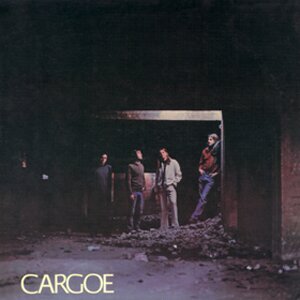 "With all due respect -- Jim and Rob were learning the ropes of a true recording studio -- mike technique, sound modification, mixing -- where Terry was a seasoned professional. There were some definite moments and fun and excitement and spark that were in the Beautiful recordings -- in the mix and the sound, if I remember, that you just can't beat. But there was a whole different level that Terry brought to the whole thing."
-- MAX WISLEY, bass, Cargoe
And truth be told, that level was not fully realized until Japan's JVC decided to include Cargoe among all of the other Ardent product in their 2003 "Roots of Power Pop" series. For the first time since the album was laid to rest in 1973, the tapes were uncovered and, almost as important, remastered. Packaged in compact disc-sized cardboard jackets, they were marketed as mini-LPs and they were exactly that, utilizing original artwork and the same materials, copied even to the point of not listing the added track, Tokyo Love (originally, the B-side of Feel Alright and released on the CD as a bonus track). Not surprisingly, the music-hungry Japanese took to it as did a small segment of Cargoe fans world-wide, in spite of its high import price.
While not a financial success, Terry Manning has always used it as a yardstick for quality work. He is quick to place Cargoe alongside Led Zeppelin, Z.Z. Top, George Thorogood and the Destroyers and others as prime examples of who he is as a producer and engineer.
It was not surprising that when he discovered the WMC-FM tapes along with those by Rock City that his first thoughts were to release them.
"I asked the question on the liner notes for the Live album," he told Pseu Braun, "was the music good enough to have made it if it had been on a major label? I surmise, probably so, with the proper resources behind it. I can't really say, for sure. Everyone would have to decide that now, but the music has not gone away. Here we are, thirty years later, talking about it, playing it for a potential audience of millions of people, so there was something to it that we just weren't able to pull off at the time. It took history and a lot of years and the help of Big Star being so popular to help the other Ardent groups toward their oncoming popularity today. It took all of those years for people to say, wow, that is pretty good."
"That live recording was done at one of the very earliest FM stereocasts," Wisley said. "FM was still in its infancy then and, again, we were so fortunate to have Terry and Ardent with us to be able to think forward on this thing and put something together. Terry captured the mix, too. Because we were a great live band. I think that this is one of the only, if not the only live recordings that we did."
To everyone's knowledge, that is true. Recorded shortly after the studio album's release in early 1972, the tapes show a more alive and powerful side of the band.
"There is a major difference between the live CD and the studio album. The live recording is the Zappa, James Brown, jamming kind of band, which is what we really were. The studio album is the band which sat in and did the coke bottle stuff and really worked on the harmonies until they were perfected."
"The live act was as good if not better than the album," Benton wrote. And, he might have added, more fun.
"We were in the large studio at Ardent," Phillips remembered. "Terry was mixing and we all had headphones on, so it wasn't exactly like being on stage. But it was the whole studio thing. We basically ran through the set, which was the album, in the order we thought it ought to go."
"We were so tight," Wisley said. "I listen to some of that and it sounds like we're off, but we're so on. Tommy. My God. There's no doubt that he was the most awesome rock and roll guitar player."
"It was really cool that I got to do the call letters of the radio station," laughed Phillips. "I did it on the half hour because it was FCC law or something.
"We got to hear a recording of it and a lot of it was, to us at the time, more than a great night. It was an amazing night. I remember Tokyo Love, the last song, coming off better that I ever imagined it could. I was extremely happy with the way it came off."
"All in all," Wisley said, "I remember that we were all ecstatic. It was one of the first times it was done, a stereo broadcast on a stereo FM station. It is quite a memory."
The memory was there but, quite honestly, the reviews aren't. Since the release of the CD, on Manning's Lucky Seven label, critics have been lukewarm, at best. Few have been written which did not compare Cargoe with Big Star, which frustrates both Wisley and Phillips.
"It's all the same stuff," said Wisley, somewhat dejected. "They have one CD to review and they compare us to Big Star and that whole thing. We weren't Big Star. We were our own thing."
The biggest problem, though, is getting people to listen at all. Most of those interested, when they don't hear September Gurls or something similar, are quick to toss it aside. It summarizes Cargoe's musical existence since they left Tulsa for Memphis. Like Rodney Dangerfield, they have gotten no respect.
All of those involved with the band have watched the release of the two CDs with intense interest. Whereas the Japanese CD has sold well, it has mostly been to a foreign audience eager to hear either Cargoe itself or anything and everything attached to the Memphis power pop mystique. Judging by the numbers, it is doubtful that many even know of the existence of the live CD, titled simply Live In Memphis.
Numbers mean little to Bill Phillips these days, anyway. He's seen the dark side often enough to know that having a CD on the market at all is a positive thing. And he's stopped worrying about the music. He and Wisley know that it speaks for itself, that it's what's in the grooves that counts.
Phillips summarized Cargoe's long ride beautifully when he threw out the statement that said it all: "There were a lot of almosts. Almost did this, almost did that." Upon hearing it, I thought it a perfect epitaph. But you know what? While hearing the story unfold, I couldn't help but think that maybe, just maybe, a miracle would occur and they would get that fair listen they deserved over thirty years ago, that people would break through and buy the CDs because they were good, because they are. In fact, they are more than good. Way more.
As for Jim Peters and everyone attached to the band, it was bigger than life. "Working with Cargoe," he said, "was a life-changing experience. It was huge!" It changed his life. It changed mine as well, and all I did was listen to them. Such is the power of music. In our worlds, at least.
An Addendum...
Since this article was written, the players and their extended entourage have experienced a revitalization of sorts. Max Wisley, Bill Phillips and Tim Benton have reformed Cargoe, with newcomer Steve Thornbrugh taking over guitar chores. They are at present recording and have future plans for the band and its music, which hopefully will include an album in the near future.
 Robert W. Walker and Jim Peters, those crazed radio personalities, have also put together a band, , recruiting Jim's son Ben and drummer Tim Koch and, yes, even Cargoe's bass player Max Wisley. One album, Gambetto, has been released and they are working on a new album, tentatively titled Weeds of Magic. Steeped in the harder side of rock and psych, they are stretching new genres as I type.
Obviously, this is not an end or a beginning, but a continuation. Such are the seeds of Tulsa being sowed...
CHAPTER ONE: Living On Tulsa Time...
CHAPTER TWO: Into the Mystic...
CHAPTER THREE: The Things We Dream Today...
CHAPTER FOUR: Delusion and Dissolution...
CHAPTER FIVE: The Painful Look Back...
Supporting the Indies Since 1969
