THE STORY OF CARGOE
Beautiful Sounds and Memphis Blues
CHAPTER FIVE: The Painful Look Back and.....
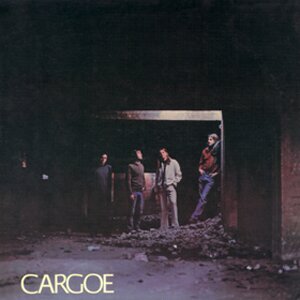 "For instance, each year, the local newspaper has what they call The Spot Awards," said Wisley. "They have a Friday supplement called The Spot, an entertainment magazine, and the readers vote each year for the local talent in various categories. Each year, they have a show they call The Spotlight. Last year, it was the Guitar Gods, three of the best guitarists around and one happened to be Frank Brown, who we back up on occasion. The year before, it was The Divas, four ladies who really belt out tunes. We taught them some Beatles tunes and they did some of their things. It's a great show and lots of fun.
"Just this past year, Bill and I put together some tunes that we've had over the years. We went down and made a sort of demo that could have been part of Cargoe's second album. Some of the songs have potential, others are just okay.
"You see, by the second album, we were really thinking about where we were going to take the sound and what we were going to do. We had some tunes in the pipeline that probably would have really worked and would have had more of a commercial feel to it.
"We had maybe enough written for half an album. They were just songs that we would write and try to work up. There was no discussion about, okay, when the next record comes up, we're going to put these down. Tommy had a song called Tight Pants Desire. '...for fancy body magic.' It was a neat little tune. Bill had a couple and I had a couple."
As for Tommy Richard, it is reported that he still plays around Tulsa. "The last I saw him," Peters recalled, "he was sitting in a little Tulsa club, just playing jazz guitar. Still good, still into it, but no aspirations whatsoever to make money with it or be a professional on the road or anything."
Looking back on the experience, Phillips and Wisley see and feel the good and the bad, but as with most such instances, the ones most memorable are those closest to the skin.
Questions had been submitted to Phillips and Wisley before the actual interview. "When I looked at these questions," Phillips said, "I thought, man, I haven't thought about some of this stuff for thirty years. It about wipes me out. You know, life goes on and so do we, but that's where you go, man, some of these memories are too painful, so I just won't think about them."
Actually, they did think about them, at least once. A number of years after the split-up, Wisley got the guys together.
"We had some tunes that would have been ready to go for a second album," Wisley said, so I'd gotten together with Tom, and Tom and I were trying to put something together, so I got Bill to come over. Tim wasn't there, of course, but we played a little and talked about doing something. I think I'd even called Peters and he'd talked about going to Fry and trying to pull it back together."
Peters had done just that. "Rob and I were on different radio stations in Miami at the time," he recalled, "and we had an agreement to put the band back together from the guys, so we called John Fry. He flew down the next day with Chilton. Fry basically said that unless it was certain that the band was back together, he did not want to get involved."
And in typical Jim Peters fashion, he made a point. "At the time, I told him that I wasn't really certain that the mix they had gotten at Ardent was really what was good for the band because the mix at Beautiful Sounds, out-of-phase or not, was bigger and more powerful. The recording were much simpler, so they could be bigger and more powerful. The version of Time at Beautiful was huge. Rob and I both loved guitar and we loved to get as much out of the guitar sound as we could when we recorded. It sounded more like today's music: the big power chords, the big fill-the-room sound.
"To be fair, Manning did achieve something that was not present in the Beautiful recordings. But what we did at Beautiful was simpler, more direct."
Robert W. Walker agreed, stating simply that he believed the Beautiful tapes were the definitive tapes recorded by the band.
Unfortunately, those tapes have been lost. Dan Penn, in the many moves he has made since leaving Memphis, has said that he has no idea where they might be, but he does not have them. Perhaps they are stored in the corner of some garage somewhere, awaiting discovery. Until they are found, we will never know.
WHILE THE BAND PLAYED, THE LABEL ...
"If you're looking for an answer as to why this whole operation failed, I think you could say that the final cause was my having the bad judgment to make the Stax deal like I did to begin with."
-- JOHN FRY, owner, Ardent Studios, co-owner, Ardent Records, 1970-1974
Ardent Records was the dream child of John Fry and Terry Manning. Having built a very successful recording operation in the studios and both being into music, they decided to tap the pop talent that existed within the confines of Memphis and, hopefully later, the world. They had tried being a minor league contributor to the major labels' catalogues, but it was easier said than done and, in the end, they simply decided to do it themselves.
To do that, they needed a distribution setup and, luckily or unluckily depending on how you view it, Stax had one ready-made, just down the way.
"We had known all the people at Stax for a long time," Fry said. "They had been our good friends and our good customers at the recording studios and we thought a lot of them. Al Bell and Jim Stewart, who were the top executives there, I think were responsive in some degree to what we were doing," so a deal was signed.
"Under the terms of the distribution agreement, Stax would own the masters. Any masters that were actually delivered to them and deemed satisfactory for release and put out became property of Stax."
When the Cargoe and Big Star albums were finally released, things at first looked promising. Both bands gained positive attention in the trade press and Cargoe's single even charted in Cash Box and Record World, which were smaller Billboard type magazines. Feel Alright (Ardent changed the spelling to one 'L'), having charted at stations in Memphis and Tulsa with the Beautiful single, repeated the trick, jumping once again into the Top Ten in those markets with the remake. Eventually, word would get to the band members that other stations had it moving up their charts, one station in Hawaii reporting it as high as #5.
Fry was pleased and Manning, when he wasn't in the studio, seemed happy, but it would not be long before the elation faded. As sales numbers came in, Fry was stunned. There weren't any. Somewhere between the studio and the stores, something had gone wrong. In between phone calls and trips to various record stores, it became obvious what the trouble was: there were no records in the stores.
Stax, handled through independent distributors at the time, was expert at marketing to the R&B market, "but certainly the people who worked there did not understand at all what was going on with this kind of music," Fry conceded. "They had never had any success with records directed toward the kind of market we were appealing to. What they had been doing was entirely different -- they were working in an entirely different area and they just were not prepared to help us. At the same time, we were not prepared to help ourselves. Now, we gradually got to the place where we were prepared to help ourselves, as far as promotion was concerned. At one point, we had four full-time people in promotion and generated a lot of radio airplay on some of the product, but we were never in a position where we could control the sales and distribution aspect. There was never anything you could call a coordinated marketing program and we never had any appreciable success in having product available in the areas where records were being played on the radio.
"After we'd been with Stax for six or eight months, I guess they made a deal to pull out of the independents and go through CBS. We had only one distribution agreement, of course, and that was with Stax. Later, the question developed into which distributor handled Stax."
"Ardent Records was just a few people with a very small staff in a small town in the South," explained Manning, "distributed by, yes, a bigger record company, but the company that distributed us was a black music company. Basically, they had Otis Redding and Sam & Dave and Isaac Hayes ... some of the greatest soul music of all-time ... some of the greatest music of all-time. But no one involved had a lot of acumen relating to the pop music business, the rock music business. We were trying to go up against Columbia, Warner Brothers, RCA -- big names with big money and big staff, with lots of resources behind them. Yes, it can be done and sometimes, occasionally, small labels have turned into big labels. This, sadly, was not one of those cases."
"When CBS took over Stax distribution," Fry went on, "I suppose the Cargoe album was pulled off the market. It was still in the catalogue and if someone had tried hard enough, they could have ordered it. CBS, based on sales (or lack of sales) up to that time, did not elect to press any Cargoe product and put it in their inventory. Now, Stax had some inventory and could have supplied any orders that they received, but it was not put in to the CBS distribution system like it was a current release or an item in someone's catalogue for which there was a demand, because. frankly, there wasn't. At least, they thought so. Whether they were correct is another matter."
Whereas Cargoe's LP virtually disappeared overnight (at least, in the areas where it had appeared at all), Big Star remained. CBS had added their record to the inventory and, when Radio City was released, presented it to the public. The result was no better than what had happened under the independents. A little airplay, no records, and finally, no airplay. Thus it was with the other Ardent releases, Brian Alexander Robertson's Wringing Applause and The Hot Dogs' Say What You Mean.
Frustration eventually not only replaced the initial hopes, it shrouded the entire Ardent operation.
"You could imagine the effect on the artist," Fry lamented. "There were a lot of places somewhat secretive about what exactly goes on. We had the type of situation where people could walk in at any time and be just as well-informed with what was going down as far as the business end of it as they wanted to be. And when they would hear some of the stuff that was going down as far as distribution was concerned, it did little to help their level of enthusiasm about what they were working on.
"The situation with Stax deteriorated steadily from the time they made the CBS deal, not only with our records, but also with their own releases. By the time you went through the bureaucracy at Stax and then went through the much larger one at CBS, the situation was just impossible. Then Stax began to encounter some financial difficulties (tied in with the Union Planters Bank scandal). At the same time, we at Ardent had grown rather disgruntled. After beating your head against the wall for a certain length of time, you discover that it hurts and you don't want to do it anymore.
"I mean, you had to be there to appreciate the organization, or lack of it, that Stax had. And I'm not trying to be bitter about it or anything else, but it was just unbelievable.
"At that time, to be frank with you, there was a little friction between Terry and myself because it was his opinion that we ought to stick with Stax to the bitter end. I said I can't take it anymore, so you go your way and I'll go mine and that was where we left it. But we're still on good terms."
Manning did continue. Stax made a deal with him to distribute Privilege, a label that he ran until Stax folded, sometime in the late seventies.
Both Fry and Manning were crushed by what happened, as were the bands involved. It was earth-shattering, true, but there were some positives.
"(Positive critical response) was the only gratifying part of the experience," said Fry. "That was the only thing that you had to kind of keep you going. But at the same time, it was a source of great frustration. It would be easy for me to understand if you put a record out and no one had anything to say about it or everyone wrote it up and said it was the worst thing they'd ever heard. But when you have people saying all these nice things about you and you're not selling records, it really makes you sure that there is something bad wrong.
"If you want to get to the bottom of the distribution thing, I have a file about three inches thick of letters that came in during the times that these things were released. The records were on the market, they were being written about in the trade and consumer magazines. The letters came in from everywhere you could imagine. Basically, they said I desperately want to buy this record and they can't order it. When you stop and think about how hard it is for some guy out there who isn't in the record business to just secure our address. Getting our address in Memphis is not as easy as getting that of CBS in New York. Considering how fickle the public usually is, I've often wondered by what factor I should multiply to come up with the number of albums we should have sold. If somebody went to that much trouble, we would usually send them the record for free. I think we may have distributed more that way than we actually sold.
"I saw the records as cut-outs in stores. There was a time that I went into Peaches, which was a big record store in Fort Lauderdale. They had tons of Cargoe and both Big Star albums and even some Hot Dogs in their cut-outs. It blew me away. I didn't expect to see that, but I suppose that anyone who wanted them could have gone in and handed them two bucks for a copy.
"After we folded the label, we did have some foreign inquiries. It is strange that the foreign distributors who contracted with Stax were universally disinterested in doing anything with us, but there were other foreign distributors who would have released the records. By virtue of the fact that Stax had an exclusive arrangement with other people for those foreign territories, nothing was ever done along those lines. The only things released on foreign soil to my knowledge, was the Cargoe 45 in Canada and a four song EP by Big Star in Brazil. We had no idea about the Brazil release until it was brought to our attention. They didn't even send to us for a tape. They took an album and mastered the EP by playing back the record.
"I eventually got so disgusted with the whole thing at the time that the distribution thing was falling apart and Stax was going out of business that I made a deal to sell the studio to some people. I was completely out of the business for about six months and then they went broke, so I got back in. I suppose it's tempting to get back in to the record business, but on the other hand that thing was such a miserable and frustrating experience that I'm not entirely sure I'd want to run the risk of repeating it."
Since the interview with John Fry, which took place in 1977, Fry resurrected Ardent Records as a Christian rock label, which is headed by Jody Stephens.
CHAPTER ONE: Living On Tulsa Time...
CHAPTER TWO: Into the Mystic...
CHAPTER THREE: The Things We Dream Today...
CHAPTER FOUR: Delusion and Dissolution...
CHAPTER SIX: Such Is the Power of Music...
Supporting the Indies Since 1969
